In today’s fast-moving digital economy, US businesses need more than just good software. They need systems that are scalable, secure, and built to evolve. For many US companies, full-stack development has become a practical way to build scalable, secure software without slowing down innovation. That’s where it becomes a strategic advantage, not just a technical choice.
Topic Breakdown
What Is Full-Stack Development and How Does It Work?
Full-stack development refers to building and maintaining both the front end and back end of an application. Instead of separating responsibilities across multiple disconnected teams, full-stack developers understand and work across the entire technology stack.
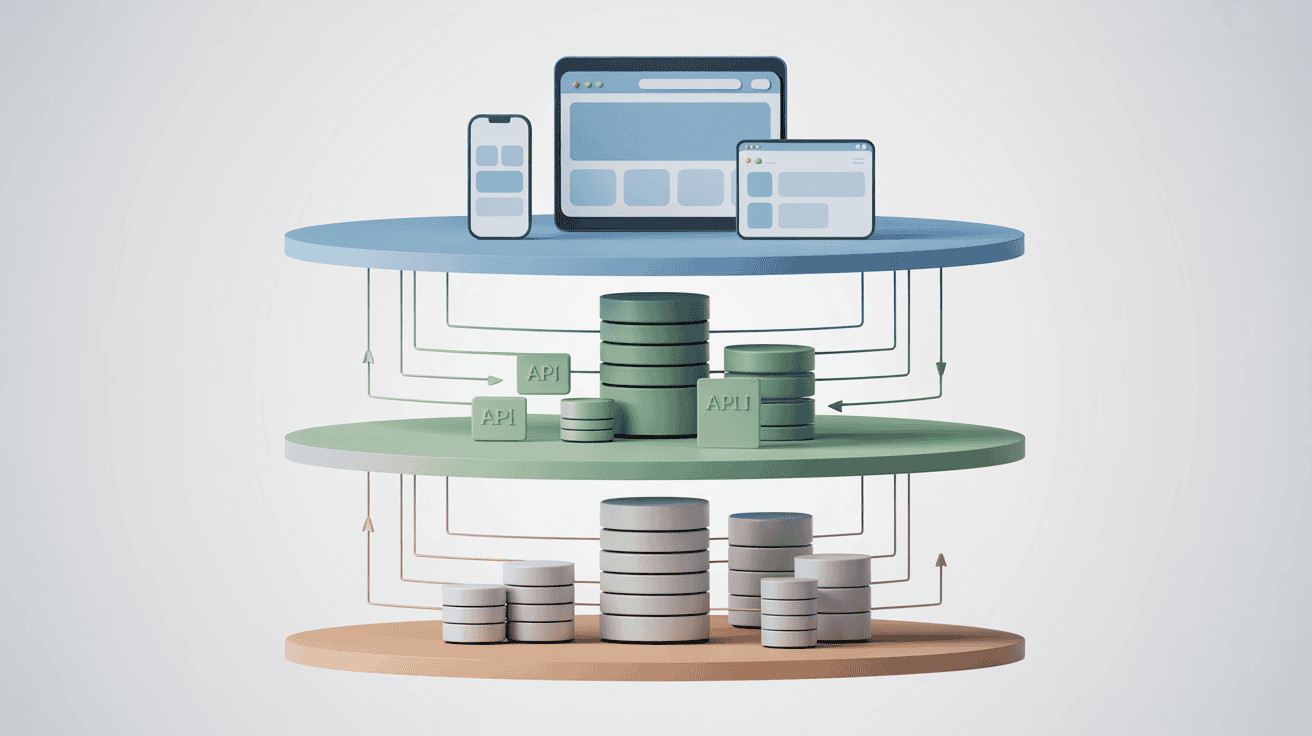
A typical full-stack setup includes:
- ➡️ Front end: User interfaces, UX, responsiveness, accessibility
- ➡️ Back end: Business logic, APIs, authentication, integrations
- ➡️ Databases: Structured and unstructured data storage
- ➡️ Infrastructure: Cloud hosting, deployment pipelines, scalability
For modern US businesses, this end-to-end view results in faster development, fewer bottlenecks, and more cohesive products.
Why Full-Stack Development Matters for US Businesses
For growing organizations, full-stack software development reduces friction between teams and improves delivery speed across the entire product lifecycle.
1. Faster Time to Market
In competitive US markets, speed matters. Full-stack development reduces handoffs between teams, enabling:
- ✔️ Faster MVP launches
- ✔️ Quicker feature iterations
- ✔️ Shorter feedback loops
This is especially valuable for startups, SaaS platforms, and internal business tools.

2. Lower Development and Maintenance Costs
Hiring or outsourcing fragmented development teams often leads to duplicated effort and communication gaps. Full-stack development helps businesses:
- ✔️ Reduce coordination overhead
- ✔️ Minimize rework caused by misalignment
- ✔️ Maintain cleaner, more consistent codebases
For cost-conscious US businesses, this translates into better ROI over the product lifecycle.
3. Better Scalability and Long-Term Planning
Full-stack developers design systems with the big picture in mind. That means:
- ✔️ Front ends that won’t break as traffic grows
- ✔️ Back ends that support future integrations
- ✔️ Architectures that evolve with business needs
This approach is critical for US companies planning multi-year growth, funding rounds, or enterprise expansion.
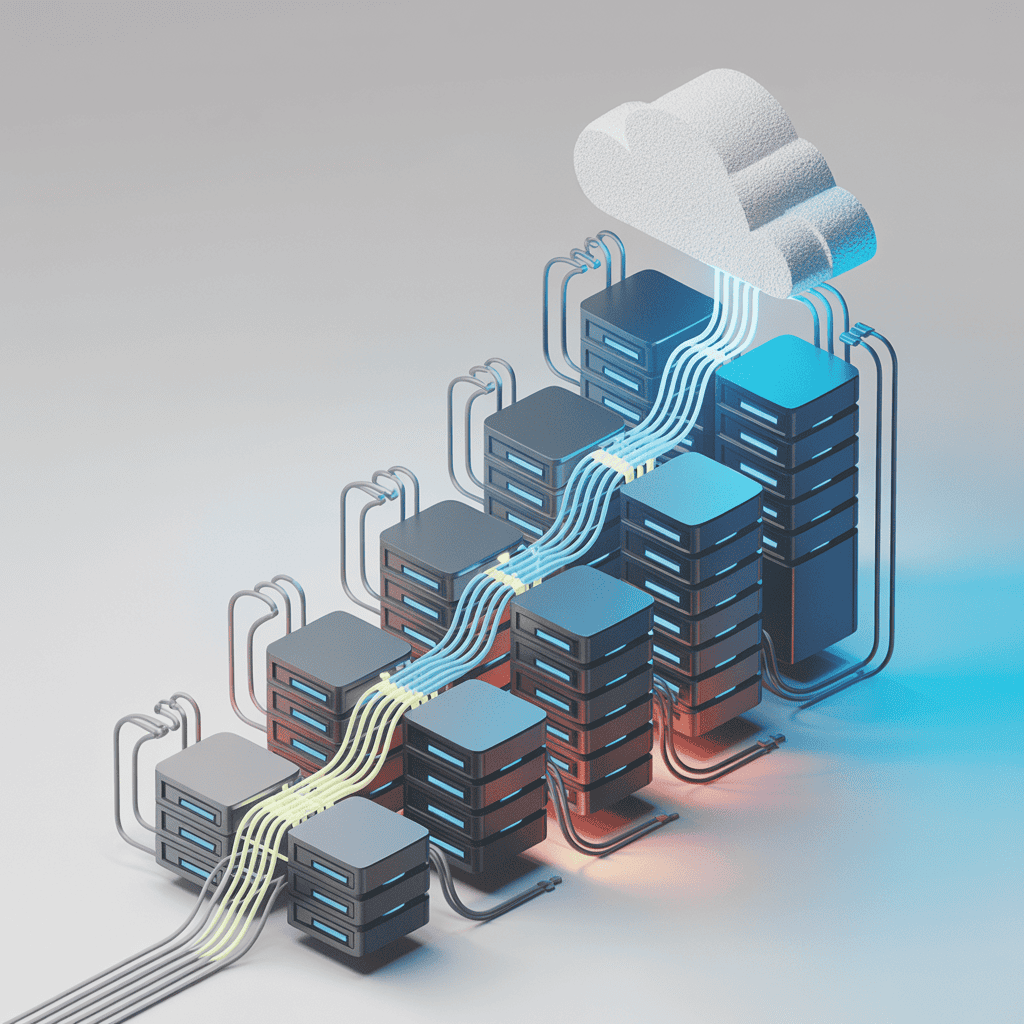
📌Cloud-native architectures supported by platforms like AWS enable full-stack teams to design for long-term scalability.
4. Improved Security and Performance
When front-end and back-end decisions are made in isolation, security gaps can emerge. Full-stack development encourages:
- ✔️ Consistent authentication and authorization flows
- ✔️ Secure API design
- ✔️ Performance optimization across the entire stack
For US businesses operating in regulated industries, this holistic mindset reduces risk.
Full-Stack Teams vs Specialized Teams

Choosing between full-stack and specialized teams affects speed, cost, and scalability. Understanding how each model works helps US businesses align technical decisions with long-term goals.
| Aspect | Full-Stack Teams | Highly Specialized Teams |
|---|---|---|
| Speed | Faster iterations | Slower handoffs |
| Cost | More cost-efficient | Higher coordination costs |
| Flexibility | High | Moderate |
| Scalability | Clear long-term vision | Can become fragmented |
Many modern US companies adopt a hybrid approach: using full-stack teams as a core foundation, then layering in specialists as the product matures.
Who Benefits Most from Full-Stack Developers?
Startups and scaling companies often rely on full-stack developers to move faster while maintaining architectural consistency. Full-stack development is particularly valuable for:
- ✅ Startups building MVPs and validating ideas
- ✅ SaaS companies iterating features rapidly
- ✅ Enterprises modernizing legacy systems
- ✅ US businesses integrating AI, automation, or cloud platforms
If your product roadmap involves constant change, full-stack development provides the flexibility to adapt without rebuilding from scratch.
Why US Businesses Are Increasingly Choosing Full-Stack Teams
By 2026, digital products are no longer static. They evolve continuously. US businesses are prioritizing full-stack development because it supports:
- ✅ Agile decision-making
- ✅ Faster innovation cycles
- ✅ Stronger alignment between technology and business goals
Instead of treating software as a cost center, full-stack development turns it into a competitive asset.
Final Thoughts
Full-stack development isn’t about doing everything with fewer people — it’s about building smarter, more resilient systems. For modern US businesses navigating growth, competition, and digital transformation, it’s one of the most practical development models available.
FAQs
What is full-stack development?
Full-stack development covers both the front end and back end of an application, including databases, APIs, and infrastructure.
Why is full-stack development important for US businesses?
It reduces development time, lowers costs, and improves scalability—key advantages in competitive US markets.
Are full-stack developers better than specialists?
Not always. Full-stack developers are ideal for speed and flexibility, while specialists add value as products scale.
Is full-stack development suitable for enterprise companies?
Yes. Many enterprises use full-stack teams to modernize systems and accelerate digital transformation.
Does full-stack development support scalability?
Yes. Full-stack architectures are designed with long-term growth, performance, and integrations in mind.
Can full-stack teams support AI and cloud-based systems?
Absolutely. Full-stack development is well-suited for AI-driven and cloud-native applications.
🚀 Build Smarter Software with the Right Team
If your business needs scalable, future-ready software, partnering with a full-stack team can accelerate results without unnecessary complexity.