Chatbots are no longer just a “nice to have” feature on business websites. For many companies, they now play a direct role in customer support, lead generation, sales assistance, employee help desks, and operational efficiency.
But not all chatbots are built the same way.
Some follow fixed scripts and decision trees. Others use artificial intelligence to understand intent, respond more naturally, and improve over time. That is why the AI chatbot vs traditional chatbot decision matters. Choosing the wrong type can lead to poor customer experiences, missed leads, and more manual work for your team.
So, which one delivers better results for your business? The answer depends on your goals, customer needs, budget, and long-term plans.
Let’s break down the differences, benefits, limitations, and best use cases of each chatbot type.
Topic Breakdown
What Is a Traditional Chatbot?
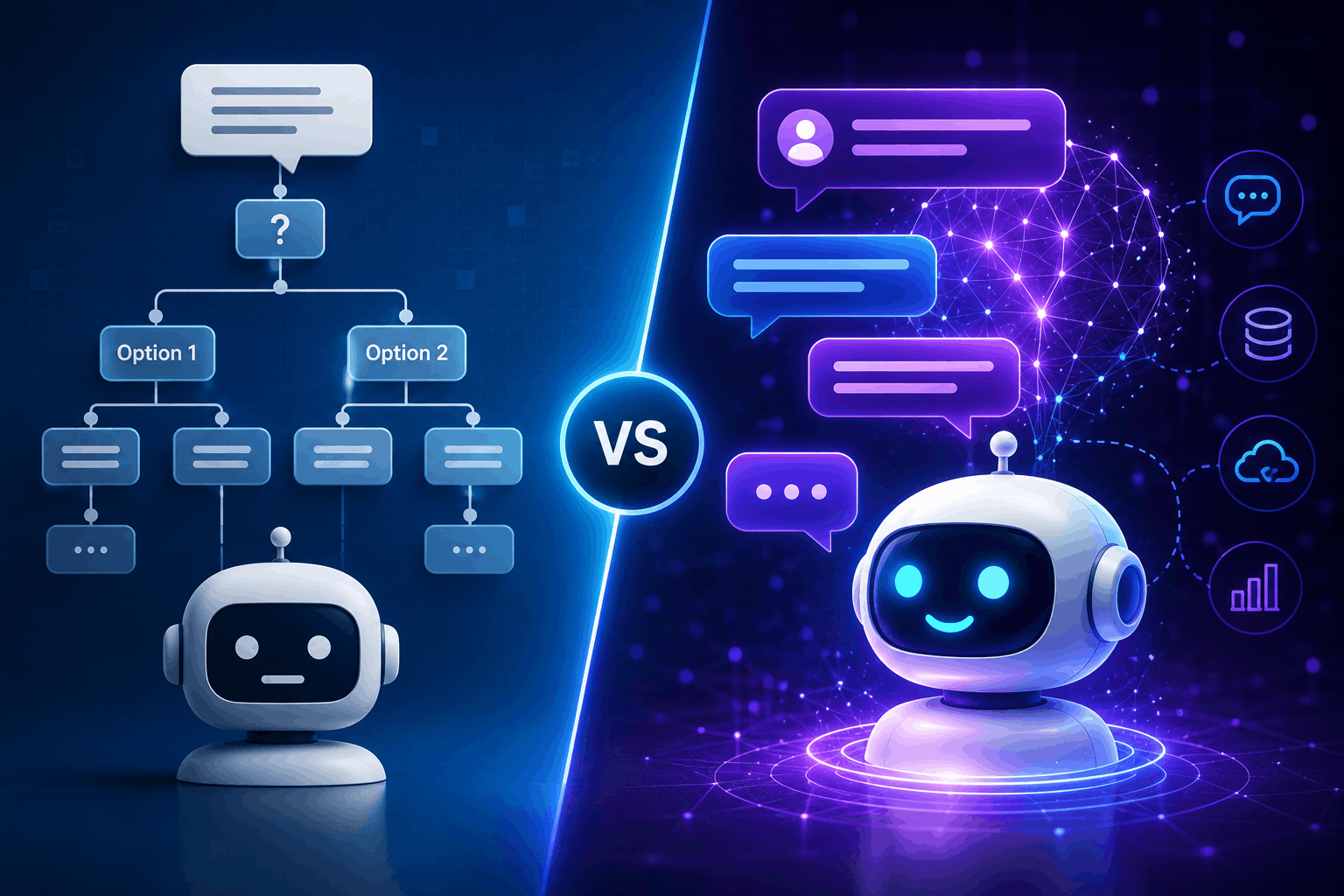
A traditional chatbot is a rule-based system that responds based on predefined scripts, keywords, buttons, or decision trees.
For example, if a customer clicks “Track my order,” the chatbot may show a fixed response or ask the user to choose from a set of options. If the customer types a question outside the chatbot’s programmed flow, the bot may fail to respond accurately or redirect the user to a human agent.
Traditional chatbots are usually designed around predictable interactions. They work best when the questions are simple, repetitive, and easy to categorize.
Common uses include:
- ✔️ Answering frequently asked questions
- ✔️ Collecting basic contact information
- ✔️ Routing users to the right department
- ✔️ Booking appointments
- ✔️ Sharing store hours, pricing, or service details
- ✔️ Guiding users through simple website actions
The biggest advantage of traditional chatbots is simplicity. They are usually faster to set up, easier to control, and more affordable for basic automation. However, their limitations become clear when customers ask complex, vague, or unexpected questions.
What Is an AI Chatbot?
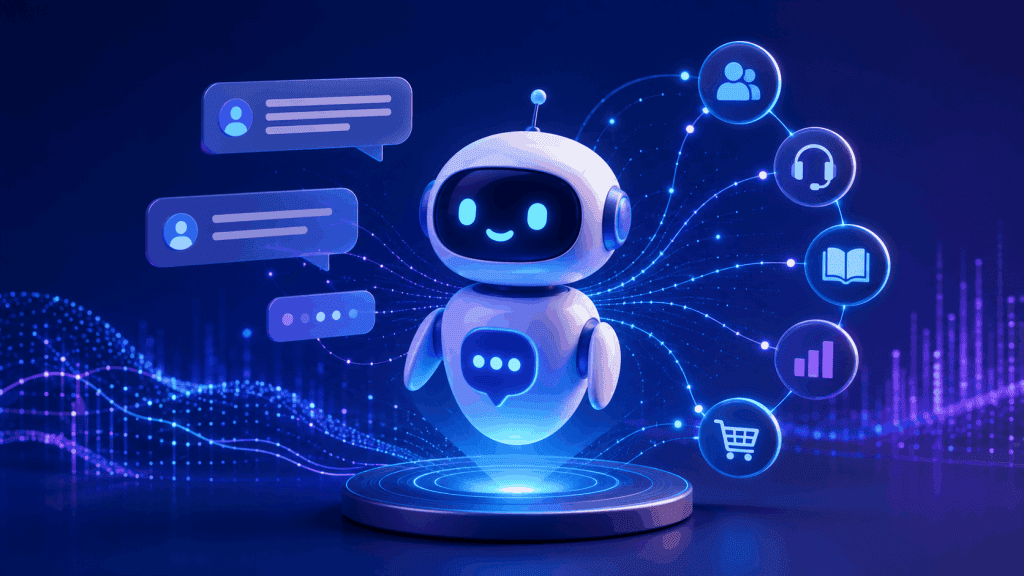
An AI chatbot uses artificial intelligence, natural language processing, machine learning, and sometimes large language models to understand user intent and generate more flexible responses.
Instead of relying only on fixed scripts, an AI chatbot can interpret what a user is trying to say, even if the wording is different from what the system expected. This makes the conversation feel more natural and useful.
For example, a customer might type:
“I bought something last week and still haven’t received it. Can you check what happened?”
A traditional chatbot may struggle unless the user selects “Track order” or types a specific keyword. An AI chatbot can better understand that the customer is asking about an order status issue and guide the conversation from there.
This is where conversational AI becomes valuable. It allows businesses to create chatbot experiences that are more responsive, personalized, and context-aware.
AI chatbots can support:
- ✔️ Customer service automation
- ✔️ Lead qualification
- ✔️ Product recommendations
- ✔️ Internal employee support
- ✔️ Sales assistance
- ✔️ Technical troubleshooting
- ✔️ Knowledge base search
- ✔️ Multilingual support
- ✔️ CRM and help desk integration
With the right AI chatbot development strategy, businesses can go beyond simple automation and create digital assistants that support real business outcomes.
AI Chatbot vs Traditional Chatbot: A Side-by-Side Comparison
Both chatbot types can be useful, but they serve different purposes. Here is a practical comparison.
| Feature | Traditional Chatbot | AI Chatbot |
| Conversation style | Scripted and menu-based | Natural and flexible |
| User input | Works best with buttons, keywords, or fixed choices | Can understand varied wording and intent |
| Personalization | Limited | More advanced, depending on data and integration |
| Learning ability | Does not improve without manual updates | Can improve with training, feedback, and optimization |
| Best for | Simple FAQs and predictable tasks | Complex support, lead qualification, and personalized assistance |
| Setup complexity | Lower | Higher |
| Cost | Usually lower upfront | Higher upfront, with stronger long-term potential |
| Maintenance | Manual script updates | Ongoing monitoring, training, and refinement |
| Customer experience | Useful for basic needs | Better for more natural, helpful conversations |
| Scalability | Limited by predefined flows | Better suited for growing and changing needs |
A traditional chatbot can still be effective when the conversation is simple. But if your business needs smarter automation, better user understanding, or more personalized engagement, an AI chatbot is usually the stronger option.
When Traditional Chatbots Still Make Sense
Traditional chatbots are not outdated in every situation. In fact, they can still be a practical choice for businesses with simple, clearly defined needs.
A traditional chatbot may be enough if your business only needs to answer a short list of common questions or guide users through a predictable flow. For example, a clinic may use a chatbot to show office hours, location, appointment links, and insurance information. A small e-commerce store may use one to answer shipping, return, and payment questions.
Traditional chatbots also make sense when control is more important than flexibility. Since every response is prewritten, businesses can tightly manage what the bot says. This may be helpful in industries where accuracy, compliance, or brand wording must be carefully controlled.
Traditional chatbots are a good fit for:
- ✔️ Small websites with basic inquiries
- ✔️ Businesses with limited automation budgets
- ✔️ Simple booking or inquiry forms
- ✔️ FAQ-based customer support
- ✔️ Clear decision-tree workflows
- ✔️ Companies that do not yet have clean data or integrated systems
The main limitation is that traditional chatbots are only as good as the scripts behind them. When customer questions become more complex, the experience can quickly feel frustrating.
When AI Chatbots Deliver Better Results
AI chatbots are better suited for businesses that need more than basic question-and-answer automation.
They are especially useful when customers ask questions in different ways, need personalized recommendations, or expect faster support across multiple channels. AI chatbots can help reduce repetitive work while giving users a better chance of getting the right answer without waiting for a human agent.
AI chatbots can deliver stronger results in areas like:
Customer Support
AI chatbots can help answer support questions, search knowledge bases, summarize issues, and route complex cases to the right human agent. This can reduce response times and help support teams focus on higher-value conversations.
Lead Qualification
Instead of simply collecting a name and email address, an AI chatbot can ask follow-up questions, identify customer needs, score leads, and send qualified prospects to the sales team.
E-Commerce Assistance
AI chatbots can recommend products, explain options, answer return questions, and guide shoppers through the buying process. This can make the shopping experience feel more helpful and less transactional.
SaaS and Technical Support
For software companies, AI chatbots can help users troubleshoot issues, understand features, find documentation, and escalate technical concerns with better context.
Internal Business Support
AI chatbots are not only for customers. They can also help employees access HR policies, IT support, onboarding materials, internal documentation, and workflow guidance.
In these cases, conversational AI can improve both customer experience and operational efficiency.
Key Benefits of AI Chatbot Development
AI chatbot development gives businesses the opportunity to build a solution around their actual workflows, customers, systems, and goals.
A generic chatbot may answer basic questions, but a custom AI chatbot can be designed to support the way your business operates. That includes connecting with your CRM, help desk, e-commerce platform, scheduling system, or internal knowledge base.
Here are some of the biggest benefits:
Better Customer Experience
AI chatbots can understand more natural questions, provide more relevant answers, and reduce the friction that often comes with rigid chatbot menus.
Faster Response Times
Customers do not want to wait hours for simple answers. AI chatbots can provide instant support for common issues while sending more complex concerns to the right team.
More Efficient Teams
When AI handles repetitive inquiries, your team can focus on strategy, relationship-building, problem-solving, and higher-priority support cases.
Stronger Lead Capture
As your business grows, an AI chatbot can help manage higher inquiry volume without requiring the same level of staffing increase.
Better Use of Business Data
When properly integrated, AI chatbots can use approved business data to provide more useful responses. This may include product details, service information, account data, support documentation, and customer history.

Challenges to Consider Before Choosing an AI Chatbot
AI chatbots can deliver strong results, but they also require thoughtful planning. Businesses should not invest in AI chatbot development simply because AI is trending.
To make the investment worthwhile, you need the right strategy, clean data, clear use cases, and proper safeguards.
Before building an AI chatbot, consider these questions:
- ✔️ What business problem should the chatbot solve?
- ✔️ Who will use it, customers, employees, or both?
- ✔️ What systems does it need to connect with?
- ✔️ What information should it be allowed to access?
- ✔️ How will sensitive data be protected?
- ✔️ What should trigger a handoff to a human agent?
- ✔️ Who will review chatbot performance?
- ✔️ How will success be measured?
AI chatbots are most effective when they are designed around real business needs, not vague automation goals.
Security is also important. If the chatbot handles customer information, account data, payment-related questions, or internal documents, your business needs clear rules around access, privacy, storage, and escalation.
The goal is not to let AI handle everything. The goal is to use AI where it improves speed, quality, and consistency while keeping human oversight where it matters most.
Traditional Chatbots vs AI Chatbots: Which Costs More?
Traditional chatbots usually cost less upfront because they are simpler to build. They require fewer integrations, less training, and a more basic conversation structure.
AI chatbots often require a larger investment because they may involve:
- ✔️ AI model selection
- ✔️ Data preparation
- ✔️ Custom chatbot design
- ✔️ System integrations
- ✔️ Testing and optimization
- ✔️ Security planning
- ✔️ Ongoing performance monitoring
- ✔️ Human handoff workflows
However, cost should not be measured only by setup price. A cheaper chatbot that frustrates users, misses leads, or fails to answer important questions can become expensive over time.
The better question is:
Which chatbot will create more value for your business?
If your needs are simple, a traditional chatbot may be enough. If your business depends on high-quality conversations, faster support, better lead handling, or more personalized experiences, an AI chatbot may deliver a stronger return.
👉 Related Reading: Outsourcing Software Development in 2026: What US Businesses Need to Know

How to Choose the Right Chatbot for Your Business
The right choice depends on your business stage, customer expectations, and operational needs.
Choose a traditional chatbot if:
- ✔️ Your customer questions are simple and repetitive
- ✔️ You only need basic automation
- ✔️ Your budget is limited
- ✔️ You want full control over every response
- ✔️ You do not need advanced personalization
- ✔️ Your workflows are predictable
Choose an AI chatbot if:
- ✔️ Customers ask varied or complex questions
- ✔️ You want more natural conversations
- ✔️ You need better lead qualification
- ✔️ You want chatbot integration with business systems
- ✔️ You have a large knowledge base or support library
- ✔️ You want to scale support without sacrificing quality
- ✔️ You need a chatbot that can improve over time
For many growing businesses, the best approach may be a hybrid model. This means using structured flows for simple tasks and AI-powered responses for more complex conversations.
For example, a chatbot can use buttons for basic routing, then use AI to answer detailed questions or summarize the customer’s issue before handing it to a human agent.
This approach gives businesses both control and flexibility.
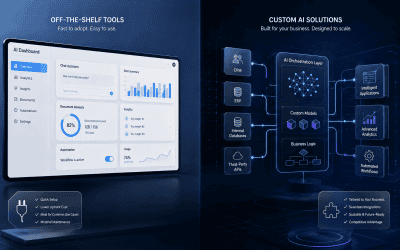
👉 Related Reading: Custom AI Solutions vs Off-the-Shelf Tools: What’s Best for Your Business?
The Future of Chatbots Is More Conversational
The future of chatbots is moving toward more intelligent, context-aware, and integrated experiences.
Customers are becoming less patient with robotic scripts and dead-end conversations. They expect digital support to understand what they mean, not just what they click. Businesses also want automation that does more than reduce support volume. They want tools that help improve sales, service quality, and operational performance.
That is why conversational AI is becoming a bigger part of customer experience strategy.
Future-ready chatbots will likely be:
- ✔️ More personalized
- ✔️ More connected to business systems
- ✔️ Better at understanding context
- ✔️ More useful across voice, chat, and messaging platforms
- ✔️ More supportive of human teams
- ✔️ More focused on measurable business outcomes
The companies that benefit most will be those that treat chatbots as part of a larger digital strategy, not just a website add-on.
Conclusion
When comparing AI chatbot vs traditional chatbot options, the better choice depends on what your business needs the chatbot to do.
Traditional chatbots are useful for simple, predictable tasks. They are affordable, easy to manage, and effective for basic FAQs or guided workflows.
AI chatbots are better for businesses that need smarter conversations, stronger personalization, better lead qualification, and more scalable support. They require more planning and investment, but they can deliver greater long-term value when built properly.
If your business is exploring AI chatbot development, the most important step is to start with the right strategy. A chatbot should not only answer questions. It should support your customers, your team, and your business goals.
Lanex helps businesses build practical AI and machine learning solutions that solve real problems, integrate with existing systems, and create better digital experiences.
FAQs
What is the difference between an AI chatbot and a traditional chatbot?
A traditional chatbot follows predefined scripts, buttons, or decision trees. An AI chatbot uses artificial intelligence and natural language processing to better understand user intent and respond more naturally.
Are AI chatbots better than traditional chatbots?
AI chatbots are usually better for complex conversations, personalization, and scalable support. Traditional chatbots can still work well for simple FAQs, basic routing, and predictable workflows.
What is conversational AI?
Conversational AI refers to technology that allows users to interact with digital systems through natural language. It powers tools like AI chatbots, virtual assistants, and automated support agents.
Is AI chatbot development expensive?
AI chatbot development usually costs more than building a simple rule-based chatbot because it may require data preparation, integrations, testing, and ongoing optimization. However, it can deliver stronger long-term value when aligned with business goals.
Can AI chatbots replace human customer service agents?
AI chatbots can handle many repetitive questions and simple tasks, but they should not replace human agents completely. The best setup allows AI to manage routine conversations while humans handle sensitive, complex, or high-value interactions.
What industries can benefit from AI chatbots?
AI chatbots can benefit industries such as e-commerce, SaaS, healthcare, finance, real estate, education, logistics, and professional services. Any business with repeated customer or employee inquiries may benefit from smarter automation.
Can AI chatbots integrate with CRM systems?
Yes. AI chatbots can be integrated with CRM systems, help desks, e-commerce platforms, scheduling tools, and internal databases. These integrations allow the chatbot to provide more relevant support and collect better customer information.
Are traditional chatbots still useful?
Yes. Traditional chatbots are still useful for simple workflows, basic FAQs, appointment booking, and routing users to the right department. They are a practical option when the conversation does not require advanced understanding.
How do I know if my business needs an AI chatbot?
Your business may need an AI chatbot if customers ask complex questions, your team handles repetitive inquiries, leads need better qualification, or your support process requires faster and more personalized responses.
What should I prepare before building an AI chatbot?
Before building an AI chatbot, define your goals, target users, common questions, required integrations, approved data sources, security requirements, and human handoff process. Clear planning leads to better chatbot performance.
🚀 Ready to explore what an AI chatbot could do for your business?
Connect with Lanex to discuss a solution built around your goals.