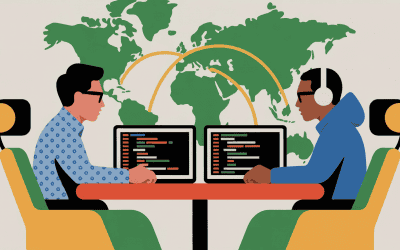

Managing a remote development team can give your business access to wider talent, better flexibility, and faster scaling. But success does not come from hiring remote developers alone. It depends on how well you structure communication, set expectations, track progress, and build trust across the team.
A strong approach to remote team management helps prevent delays, confusion, inconsistent output, and burnout. When done well, it creates a working environment where developers stay aligned, productive, and engaged no matter where they are located.
In this guide, we will walk through the practical ways to manage a remote development team successfully, from onboarding and communication to performance, culture, and long-term stability.
Topic Breakdown
Why Remote Development Teams Are Now a Long-Term Business Model
Remote development is no longer just a temporary setup or a cost-saving tactic. For many businesses, it has become a practical long-term model for building software, launching products, and scaling technical capacity without being limited by local hiring markets.
Companies choose remote development teams for several reasons. Some need specialized skills that are hard to find locally. Others want to reduce hiring time, expand delivery capacity, or support growth across multiple time zones. In many cases, remote teams also allow businesses to stay lean while maintaining high-quality development output.
That said, remote teams only work well when they are managed intentionally. Without clear systems in place, even highly skilled developers can struggle with scattered priorities, delayed decisions, or unclear ownership. That is why strong leadership and structure matter just as much as technical ability.
RELATED READING: Outsourcing Software Development in 2026: What US Businesses Need to Know
The Real Challenges of Managing a Remote Development Team
Remote teams offer clear advantages, but they also introduce management challenges that are easy to underestimate.
One of the most common issues is communication overload. Some teams have too many meetings, too many chat threads, and too many updates spread across different tools. Others have the opposite problem, where important details are never documented properly and developers are left making assumptions.
Time zone gaps can also slow progress when there is no clear handoff process. A simple blocker can sit unresolved for hours if no one knows who owns the next step. Over time, this affects delivery speed and team morale.
Another challenge is visibility. In an office, managers often rely on quick conversations or physical presence to gauge progress. In a remote setup, that approach does not work. Leaders need better systems for understanding what is moving, what is blocked, and where support is needed without micromanaging the team.
Culture can also weaken if it is left unattended. When people work remotely, they can easily feel disconnected from the wider mission, especially if communication is purely task-based. A team that only talks about tickets and deadlines may deliver in the short term, but it often struggles with retention and long-term cohesion.
Start With Clear Roles, Ownership, and Expectations

A remote team becomes easier to manage when everyone knows what they are responsible for and how success is measured.
This starts with clear role definitions. Developers should understand their scope, their expected output, the tools they will use, and who they report to. If responsibilities overlap too much, simple tasks can become bottlenecks because nobody is sure who should act.
It also helps to define what ownership looks like inside the team. For example, one developer may own front-end implementation for a feature, while another owns back-end integration and testing support. A tech lead may be responsible for code quality and architectural consistency, while a project manager handles timelines and coordination.
Expectations should also cover working hours, response times, meeting participation, documentation standards, and delivery processes. These details may sound small, but they reduce misunderstandings that often become recurring frustrations later.
When expectations are written down and shared early, teams can operate with more independence and less confusion.
Build a Communication System That Supports Focus
Good communication is not about being online all the time. It is about making sure the right information reaches the right people in the right format.
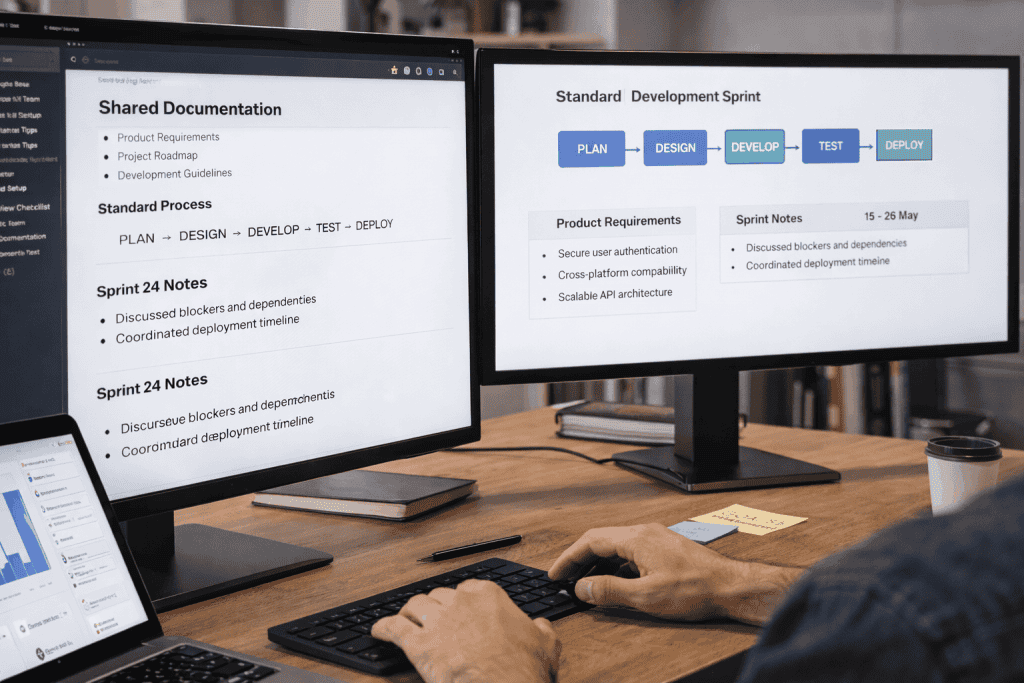
For most remote development teams, communication works best when it is divided into clear categories. Quick questions can happen in chat. Strategic discussions can happen in scheduled calls. Project updates, decisions, and technical notes should be documented in a place the team can refer back to.
This structure matters because developers need uninterrupted time to work deeply. If every question becomes urgent and every update requires a live response, productivity drops quickly.
A healthy communication system usually includes regular check-ins, but not excessive meetings. A short daily sync, a weekly planning session, and a sprint review may be enough for many teams. The goal is to create alignment without filling the calendar with meetings that add little value.
It is also important to set norms around availability. Remote teams do not need to operate like everyone is on standby all day. What matters more is clarity around when people are expected to respond, when they are in focused work time, and how urgent issues should be escalated.
Make Documentation Part of the Workflow
Documentation is one of the most important parts of managing remote teams well. Without it, knowledge stays trapped in chats, meetings, or individual memory.
A remote development team benefits from having clear documentation for project goals, feature requirements, coding standards, deployment processes, onboarding steps, and recurring decisions. This makes it easier for developers to work independently and reduces repeated questions.
Documentation also helps new team members ramp up faster. Instead of relying on multiple handover calls, they can access a well-organized source of truth that explains how the team works and where to find what they need.
This does not mean every detail needs a long formal document. In many cases, simple and updated notes are more effective than polished but outdated guides. What matters is that the information is accessible, current, and useful.
Teams that document well tend to move faster over time because they reduce friction in decision-making and knowledge transfer.
Set the Right Metrics Without Micromanaging
Managing a remote development team does not mean monitoring every hour of activity. That usually creates distrust and pushes people to focus on looking busy rather than doing meaningful work.
A better approach is to measure outcomes. For developers, this might include sprint completion, code quality, bug rates, delivery consistency, technical contribution, and collaboration. For the broader team, it could include release velocity, issue resolution, or progress against roadmap priorities.
The goal is not to turn everything into numbers. It is to create enough visibility to support better management decisions. If deadlines keep slipping, the issue may be scope, unclear requirements, or too many parallel priorities. If quality is inconsistent, the team may need stronger review standards or better technical leadership.
The best metrics help leaders ask smarter questions. They should guide conversations, not replace them.
When performance tracking focuses on outcomes, remote developers usually feel more trusted and more motivated to take ownership of their work.
Strengthen Onboarding for Long-Term Success
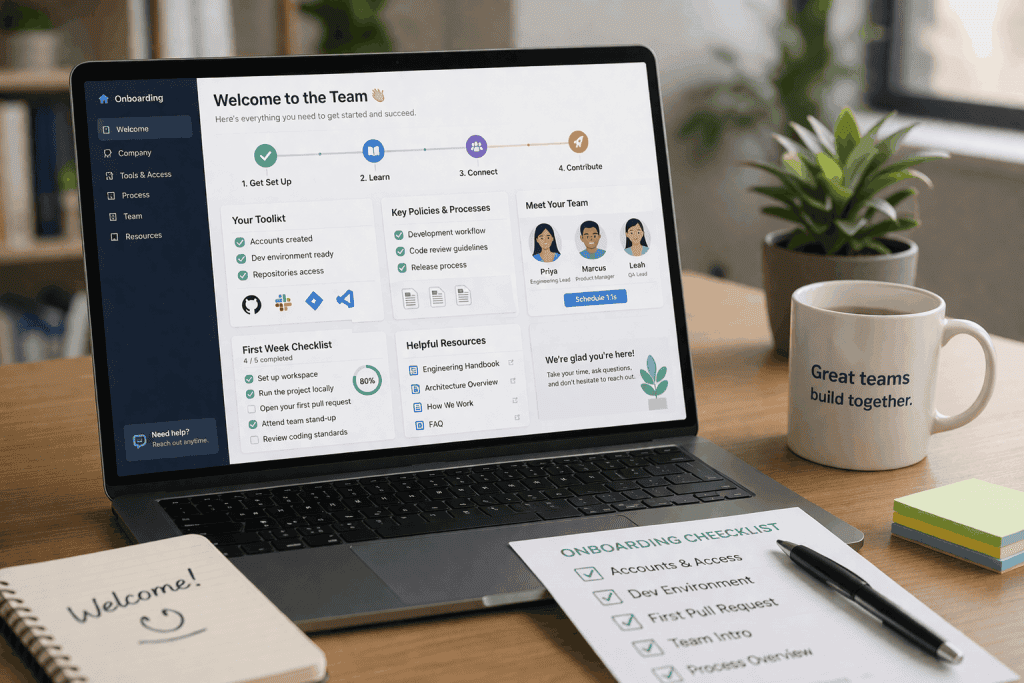
A weak onboarding process creates problems that last for months. A strong one helps developers become effective much faster.
Remote onboarding should cover more than just account access and introductions. New hires need context. They should understand the product, the users, the current roadmap, the team structure, and the development workflow. They should know how decisions are made, how code reviews are handled, and where to go when they need help.
It also helps to give new team members a structured first few weeks. This might include a clear onboarding checklist, a buddy or point person, early low-risk tasks, and scheduled follow-ups to answer questions.
Without this structure, new developers often stay quiet, guess their way through the process, or wait too long before asking for clarity. That can lead to slow ramp-up times and avoidable mistakes.
A thoughtful onboarding process sets the tone for accountability, communication, and confidence from the start.
Create a Culture of Trust and Accountability
Trust is essential in remote team management, but trust does not mean a lack of standards. The strongest remote teams combine autonomy with accountability.
Developers should feel trusted to manage their time, solve problems, and contribute ideas. At the same time, they should be accountable for deadlines, communication, and the quality of their work. This balance is what keeps the team productive without creating a controlling environment.
Managers play a big role in shaping this culture. If leaders only step in when something goes wrong, the team may start hiding issues or delaying difficult conversations. If leaders create an environment where blockers can be raised early and feedback can be shared openly, the team becomes more resilient and collaborative.
Recognition also matters. Remote teams can easily fall into a rhythm where effort is only noticed when something breaks. Celebrating wins, acknowledging contributions, and reinforcing good work help people stay connected to the team and the mission.
A healthy remote culture is built through consistent habits, not occasional morale activities.
RELATED READING: What Is Staff Augmentation? A 2025 Guide for US Tech Teams
Manage Time Zones With Intentional Planning
Many remote development teams work across different regions, which can be a major advantage when handled well. It can also become a constant source of delay when handled poorly.
The first step is to define where overlap matters most. Teams do not need eight shared hours every day, but they usually do need a reliable window for collaboration, reviews, and issue resolution. Even two to four hours of overlap can be enough when workflows are designed properly.
It is also helpful to plan for asynchronous work. Requirements, updates, and feedback should be written clearly enough that progress can continue even when some team members are offline. This is especially important for handoffs between design, development, QA, and project management.
Remote teams perform better when time zone differences are treated as a planning factor, not an inconvenience to work around later.
Encourage Better Code Reviews and Technical Alignment
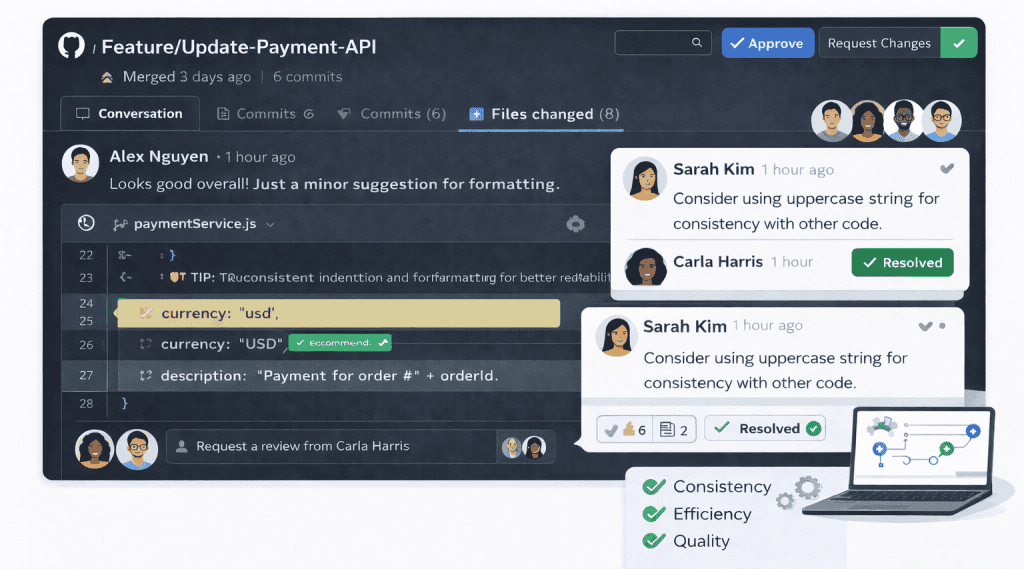
Technical quality can drift quickly in remote development teams if review processes are weak or inconsistent.
Code reviews should do more than check whether something works. They should reinforce standards, improve maintainability, catch edge cases, and help developers learn from one another. When reviews are rushed or unclear, quality issues tend to build up quietly until they affect delivery or stability.
It also helps to align the team on coding conventions, architecture decisions, branching strategies, and release processes. Remote teams need these shared standards even more than colocated teams because there are fewer informal opportunities to clarify them in the moment.
A remote development team with strong technical alignment usually spends less time fixing preventable issues and more time delivering reliable progress.
Support Team Well-Being to Reduce Burnout
Remote work can improve flexibility, but it can also blur the line between work and personal time. Developers may feel pressure to stay available longer, respond faster, or push through blockers without enough support.
Managers should pay attention to workload balance, meeting load, after-hours communication, and signs of disengagement. A consistently overloaded team may still deliver for a while, but quality, creativity, and retention usually decline over time.
Healthy remote teams encourage sustainable pace. That means realistic planning, clear priorities, and a culture where it is acceptable to raise concerns early. It also means respecting time off and avoiding the idea that responsiveness equals commitment.
Supporting well-being is not separate from performance. It is part of how high-performing teams stay effective over the long term.
🔎 RELATED READING: Staff Augmentation Services: 5 Signs You Need To Empower Your Team
Practical Tips for Better Remote Team Management
If you want to improve how your remote development team operates, start with a few practical habits:
- ✅ Define roles and responsibilities clearly
- ✅ Keep project documentation updated
- ✅ Reduce unnecessary meetings
- ✅ Measure outcomes instead of online activity
- ✅ Create a structured onboarding process
- ✅ Build regular feedback into team routines
- ✅ Use time zone overlap intentionally
- ✅ Reinforce coding and review standards
- ✅ Recognize wins and encourage open communication
These habits may seem simple, but together they create the consistency that remote teams need to succeed.
Why the Right Team Structure Matters
Managing a remote development team becomes much easier when the team itself is set up well from the start. Businesses often struggle not because remote work is flawed, but because they are working with unclear roles, weak processes, or developers who are not a strong fit for the project.
That is why many companies choose to work with experienced development partners when building or scaling remote teams. The right partner can help provide vetted talent, better onboarding support, stronger workflows, and a more stable operational structure.
Instead of building every process from scratch, businesses can move faster with a setup that already supports communication, delivery, and accountability.
Conclusion
A successful remote development team is not built on constant monitoring or endless meetings. It is built on clarity, trust, documentation, accountability, and strong systems that help people do their best work from anywhere.
Effective remote team management means creating an environment where developers understand their roles, communicate clearly, stay aligned on priorities, and feel supported over the long term. When those elements are in place, remote teams can deliver excellent results while giving businesses the flexibility to scale with confidence.
If your business is planning to grow with remote developers, the goal should not just be to hire fast. It should be to create a team structure that is sustainable, efficient, and built for long-term success.
FAQs
What makes a remote development team successful?
A successful remote development team has clear roles, strong communication systems, updated documentation, and a culture of trust and accountability. Technical skill matters, but structure and leadership are what keep the team aligned and productive.
How do you manage remote developers without micromanaging?
Focus on outcomes rather than constant activity tracking. Set clear goals, define expectations, review progress regularly, and use metrics that reflect delivery and quality instead of simply measuring time online.
What are the biggest challenges in remote team management?
Common challenges include unclear communication, time zone delays, poor documentation, weak onboarding, and limited visibility into blockers or priorities. These issues can be reduced with better systems and clearer ownership.
How often should a remote development team meet?
It depends on the team, but most teams benefit from a balanced meeting structure such as short daily check-ins, weekly planning sessions, and sprint reviews. The goal is to stay aligned without interrupting focused development work too often.
Why is documentation important for remote teams?
Documentation helps remote teams work more independently and consistently. It reduces repeated questions, improves onboarding, preserves technical knowledge, and gives everyone a shared source of truth for workflows and decisions.
🚀 Build Your Remote Development Team With Lanex
At Lanex, we help businesses scale with experienced developers who can integrate into your workflow, support your delivery goals, and strengthen your team over the long term. Whether you need to expand capacity quickly or build a more reliable remote setup, our team is here to help you move forward with confidence.